Dates
15 June 2025 to 21 June 2026
Trading numbers
What happened
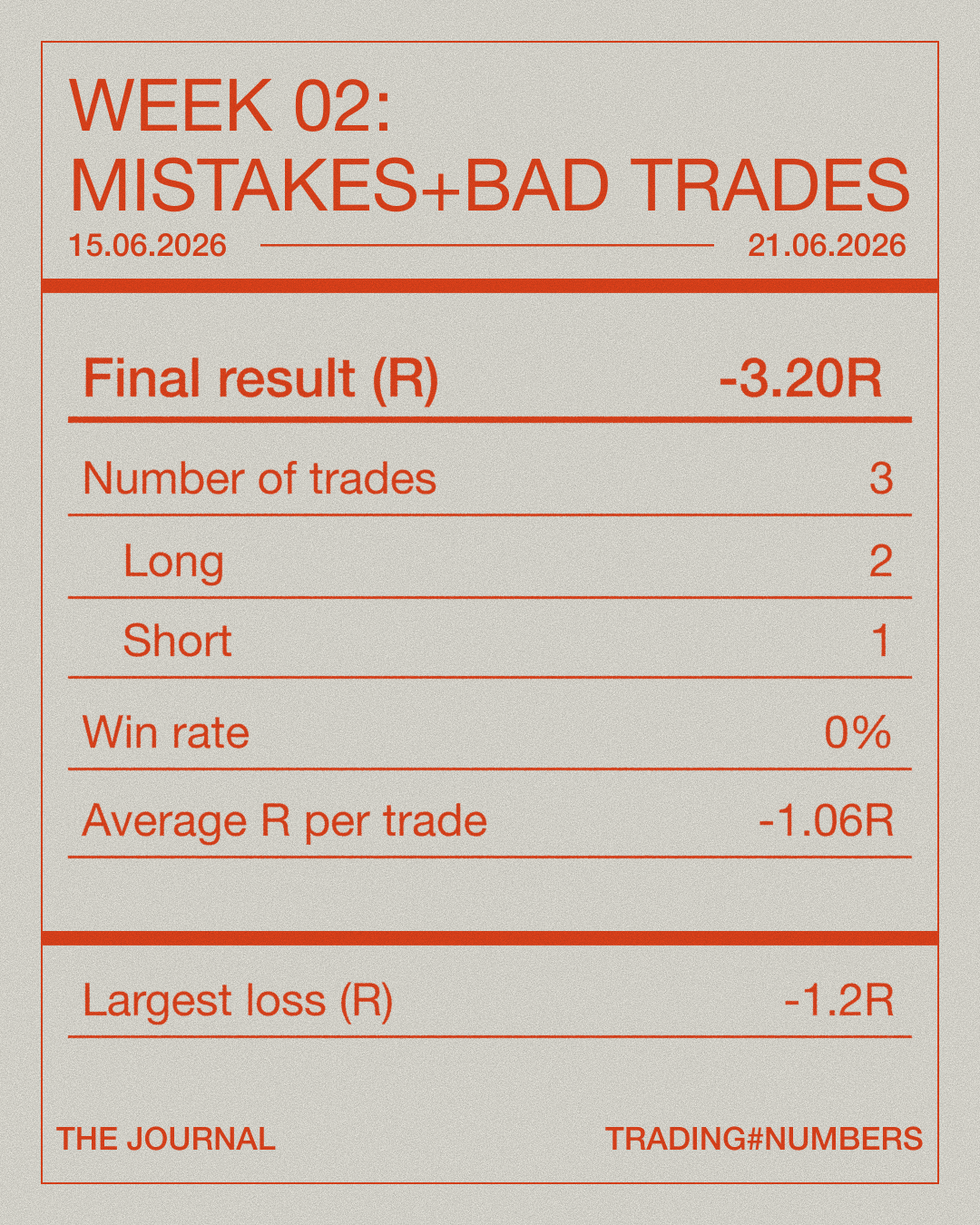
Unfortunately I had a bit of a shocker of a week. Some fundamental errors were made particularly in the planning and entry stage of the trade resulting in all losses. It was real. It was painful. It was bad.
I wasn’t able to experiment with fixing discretionary exits or profit taking strategies, which is what I was hoping to do this week.
Nonetheless writing this was a good reflection of what I did and how to fix it. Journalling is good. Now read on!
Key takeaways
1. Don’t trade the mid-range. Trade the extremes
Picking levels of interest should be easy. Or should they?
One key mistake I made this week was to take a trade in the mid-range. I was watching levels and had noticed one area that price was bouncing around in. It got me interested, and I then marked it out as a level. eventually price hit it with a volume spike and I took a short.
Price then chopped around for a decent amount of time, really going nowhere. I stayed in the trade and eventually got stopped out. Not only that, price slipped on my close and my stop was triggered for a total -1.2R. Ouch, but it happens.
Price eventually settled and moved towards a new high, or so I thought. As I stopped focusing on the level of my trade, it became completely obvious that my marked range was really at the mid-range of the real level. Had I just zoomed out a little and stopped being fixated on wanting a trade, I could have seen that I was trading from a bad level - the mid range.
My goal now is to only trade the range extremes. My (rough) rule for levels - if in doubt? It’s not a real level. It should be clear, and obvious.
2. Read the orderflow for what it is, not what you want it to be
My system is based on reading the footprint data in Exocharts - something I love doing and am really accustomed to doing, yet it was my biggest mistake of all this week.
BTC was ranging during the time I was observing it. I got a few reactions from key levels, but no volume. Each time it tagged my level, price would revert and I took note of this, but didn’t trade, waiting for volume. Discipline - good stuff right?
Eventually I had the big volume spike I wanted right at the level. Orders piled in and my setup was forming. The thing was that I was already looking for and forming an orderflow pattern in my head. I was looking for a reversion. Big mistake. Big, big mistake.
The footprint data showed me longs were already underwater, and rather than go with a continuation setup, I convinced myself that price would chop and then we’d get a quick acceleration back up. I took a long and was stopped out within 10 minutes of opening the position.
Given the data I had, I should have recognised that
The main thing for this is to look each situation uniquely. Just like any trade, look at the data itself, not what you think will happen.
3. Losing streaks happen
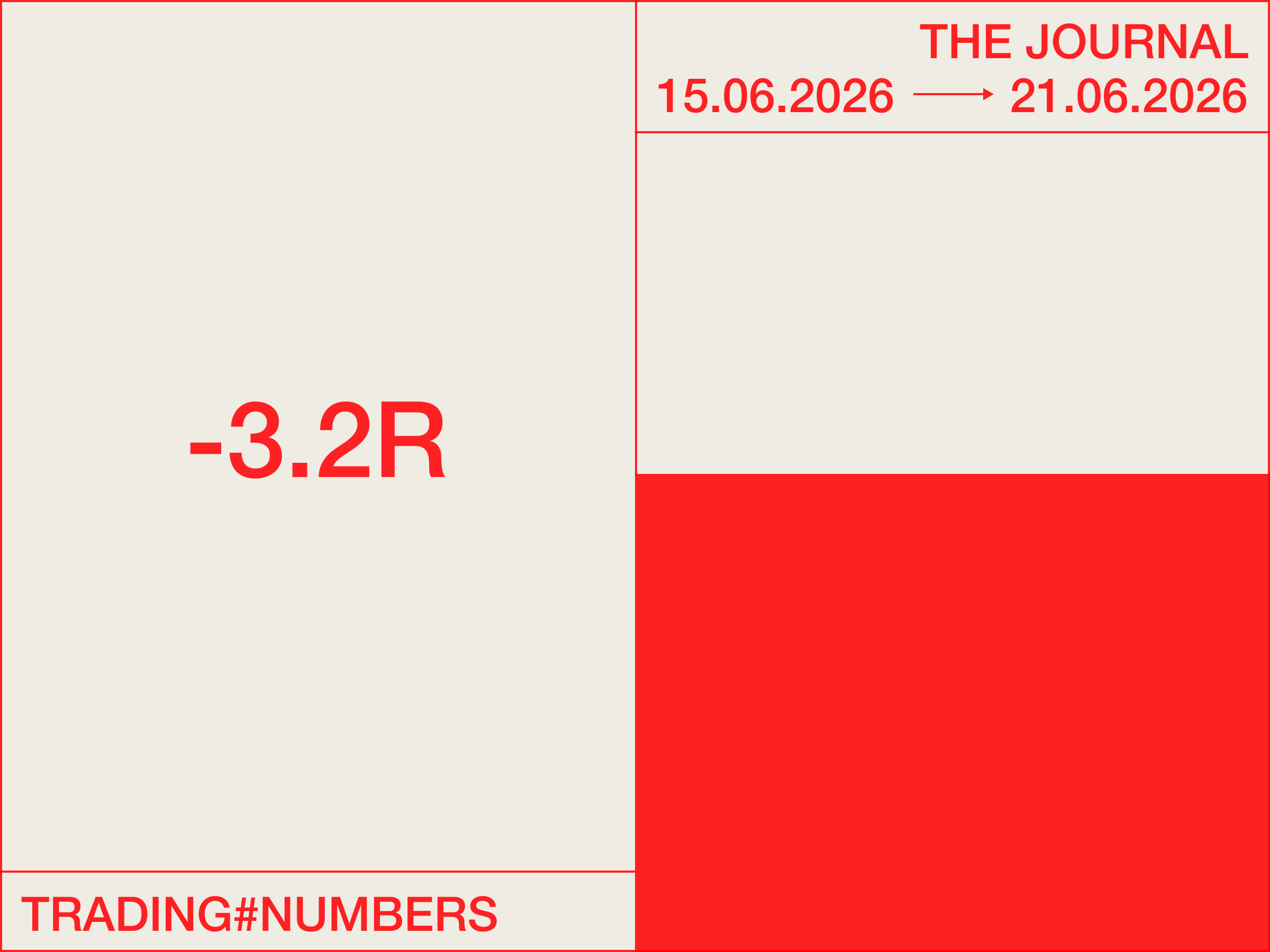
Ok, this is just week 2. Literally seven trades in. And yet, I couldn’t help but feel exhausted and mentally down from losing three trades in a row and logging my performance as -3.2R. -3.2R!
I was frustrated and annoyed at being wrong. I questioned myself and wondered - is this doable? I know it sounds crazy, and like I said, I’m two weeks in, and the doubt was real.
As upset as I was, after some ChatGPT-ing and watching a few YouTube videos on trade distribution, I regained my composure and reminded myself that no matter how robust a system is, losses happen. Sure I actually made mistakes that following my system would have prevented, and those are lessons, but it served as a good reminder that losing streaks are a very real possibility in this profession.
So the next time a losing streak happens, I’d like to think I’ll be more mentally prepared and ready to take each trade individually and separately.
For next week
Given the some of the very basic mistakes for this week, the focus is going to be back on basics:
- Take only A-grade setups
- Read the orderflow data and be patient. Wait for evidence rather than anticipating what will happen (after all this is what you pay for…)
- Plan out all trades prior to execution. Know what strategy is being used and why. Know where invalidation is and when the trade is wrong.
The main goal needs to be about data collection and trading my system. Let’s go!
Member comments