Introduction
Week 08 brought more trading opportunities than last week. Sure chart time is good, but come all, we all love us some (price) action.
I added four trades to the sample, with two winners and two losers and finishing the week at -0.33R. I think this is a good example where win rate alone says very little about profitability.
Interestingly, the biggest problems, and takeaways, came from my winners this week, rather than my losers. Both winning trades were similar not only in the setup and how they played out, but more so how I mismanaged them.
The good news is that, after reviewing both trades, I came up with a solution. And with that, brought about the first update to the System.
I’ve also reached a small milstone: 25 trades so far and while it’s been a bit of a slog, at least we’re still in the green.
The Numbers
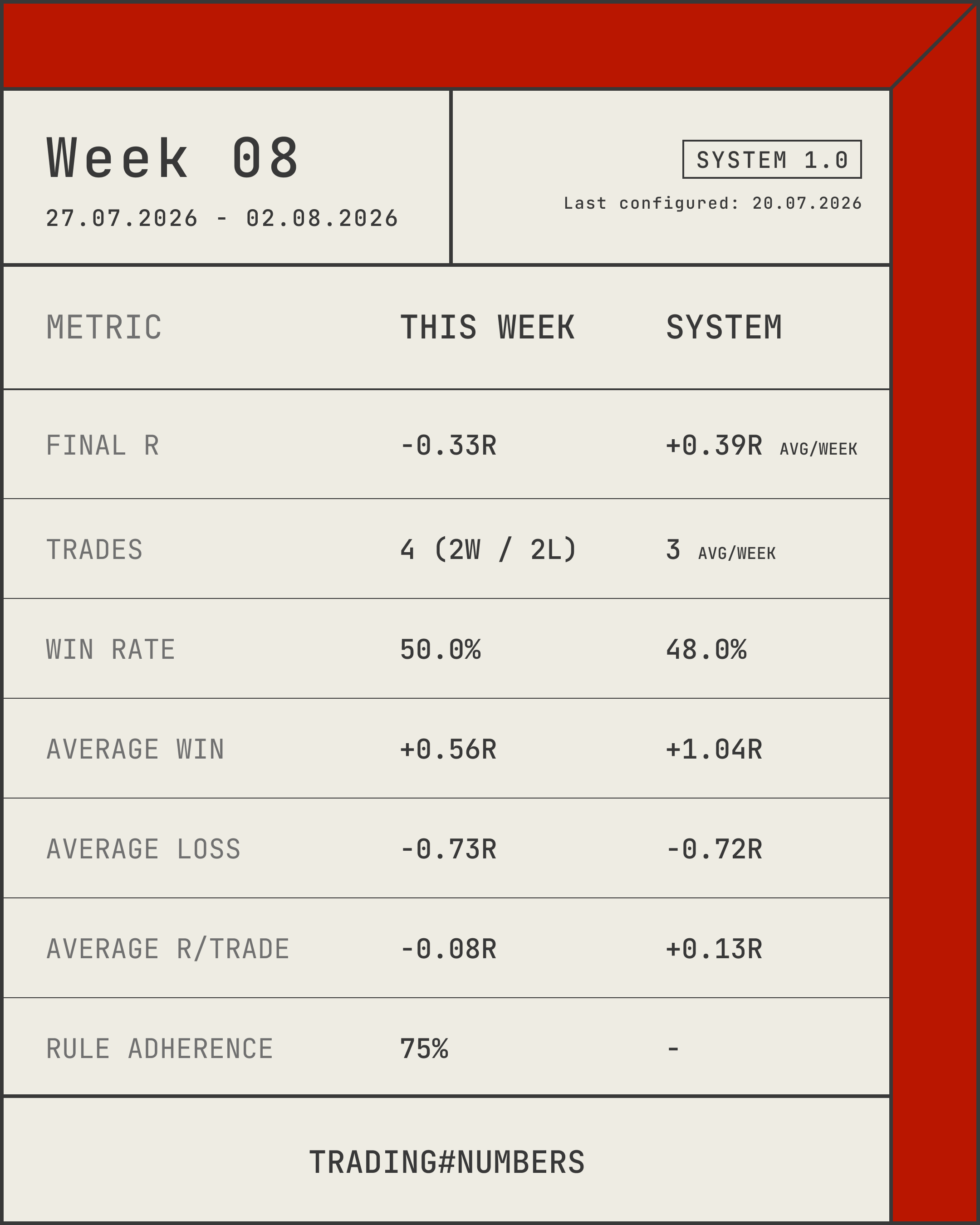
Last Week → This Week
Last week saw me formally introducing System 1.0. This week was simply about continuing to trade it as written: no tweaks and no updates.
The main carryover from Week 07 was to observe and log any setups appearing within the 30-minute window around the New York open.
I didn’t encounter any setups within this window, so the observation continues. I’ll also be formalising this and other ongoing tests inside a separate experiments tracker so they don’t disappear among the weekly notes.
The market
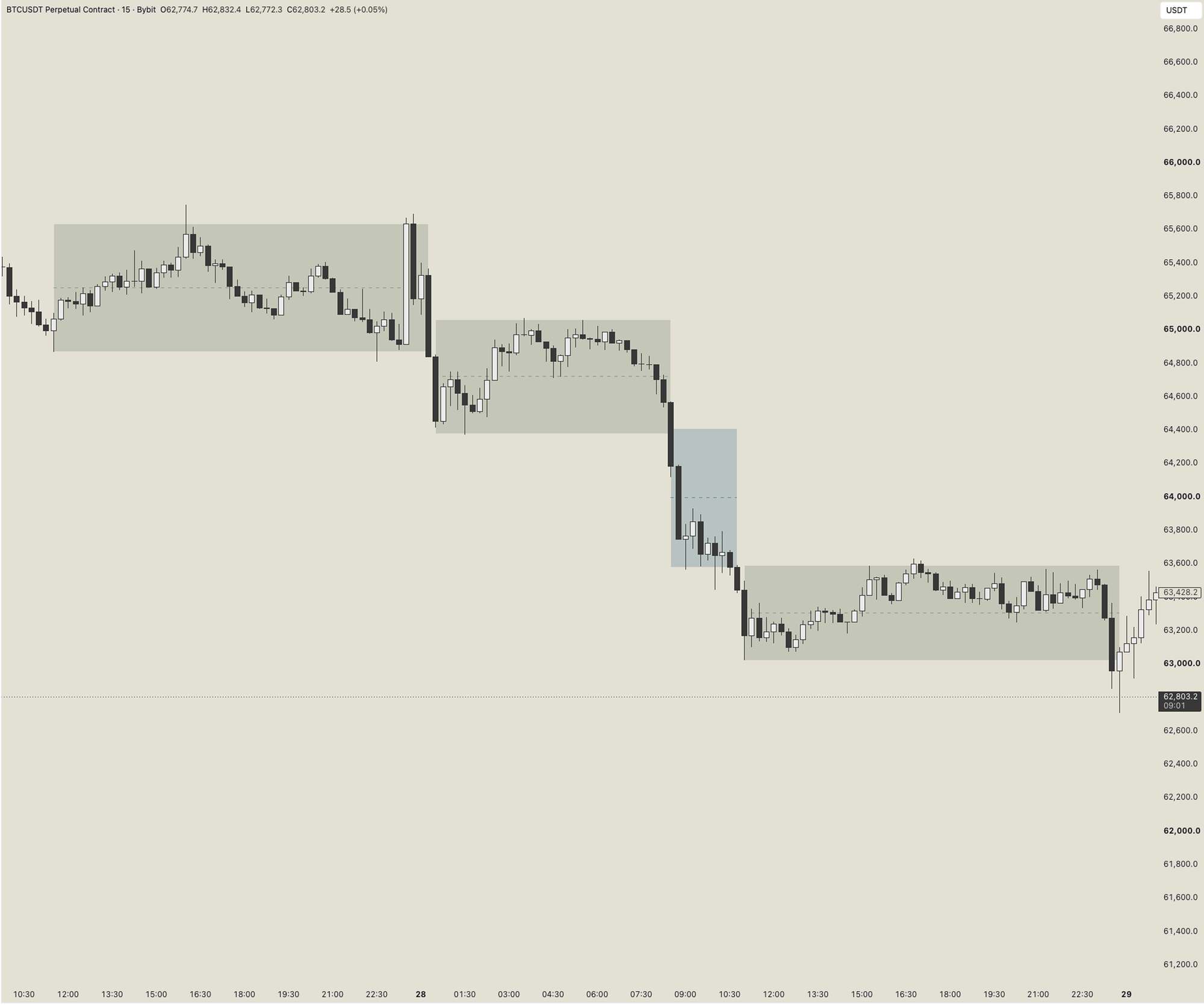
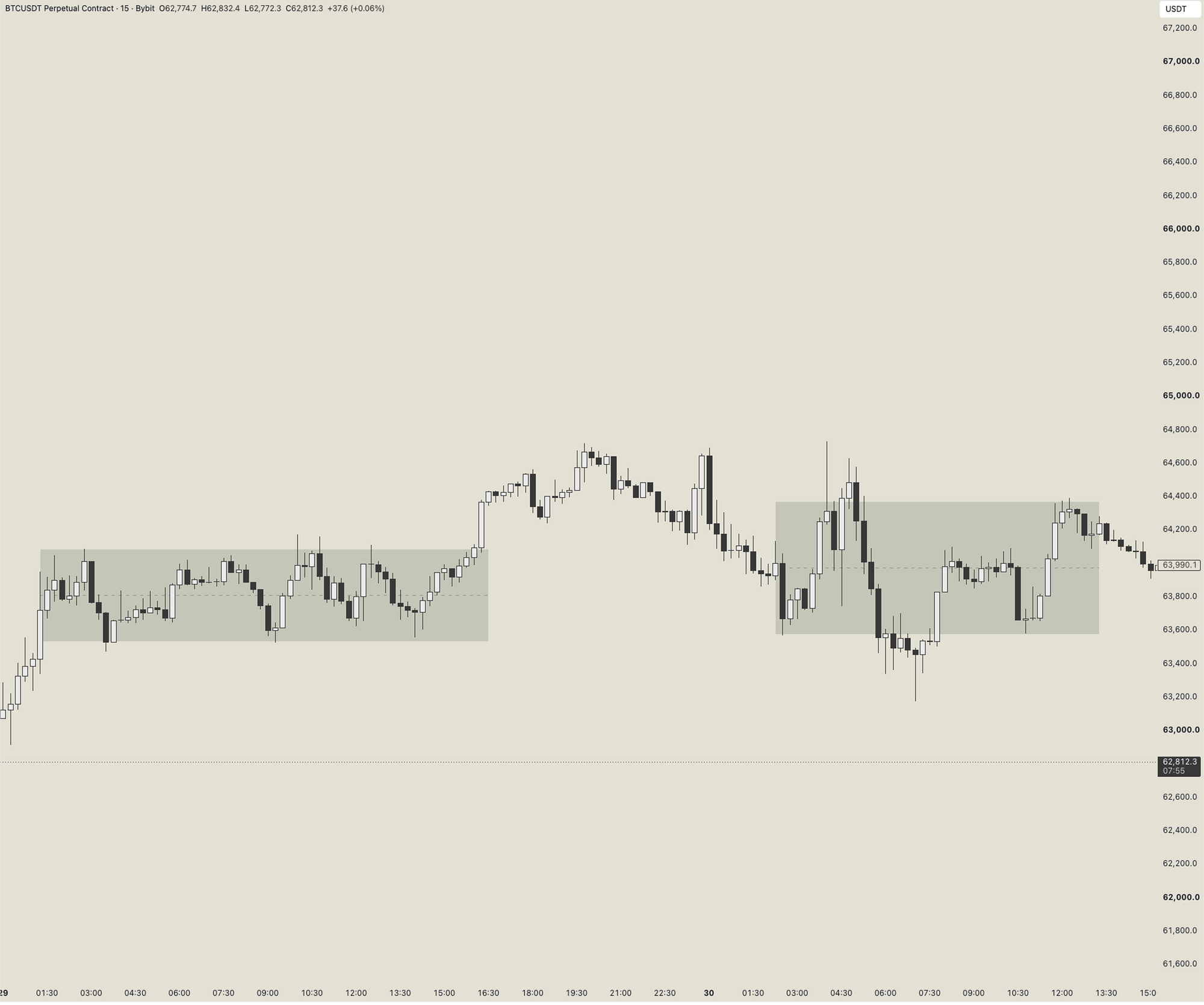
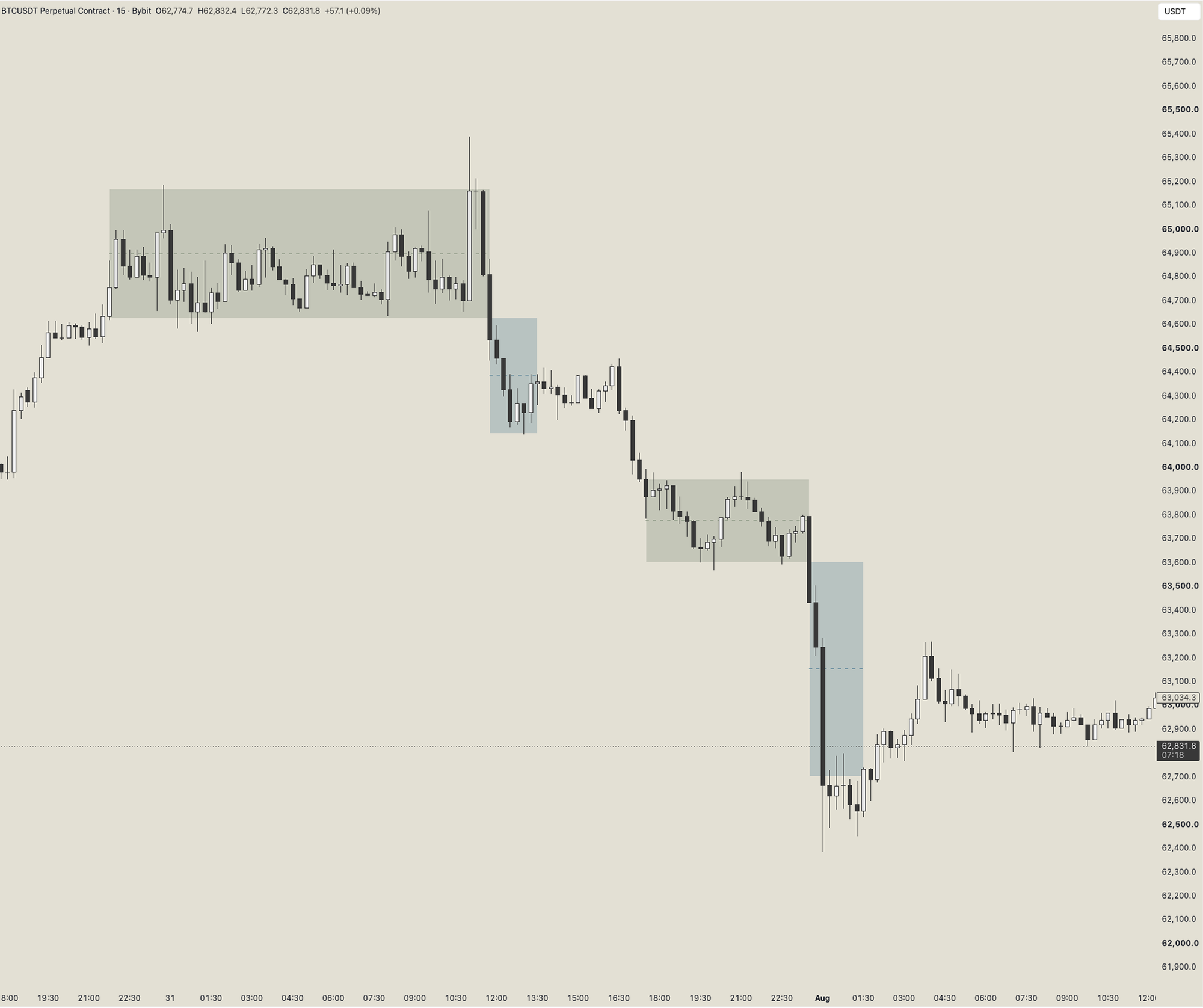
The week saw volume return to the market across all sessions. And for my trading style, this was very welcome (volume at my marked levels is a requirement for my trade setups).
BTC established a few clear ranges which was good. Actually it was really good, because both my mean reversion and trend continuation setups, work off the same key levels.
I managed to take four trades, winning two and also losing two.
Interestingly, it was the winners that frustrated me most. Despite closing for +1R and +0.12R they were both poorly managed, leaving a lot of R on the table (more like giving back to the market).
More importantly, they exposed a gap in my System which I have tightened up, allowing for a minor update to the System and taking it to V1.1 (I swear I didn’t just do this for an update, I would really have preferred the extra R).
The two losers were fine and simply me being wrong on the market. I can accept that. Both were cut before reaching full -1R losses (taker fees = pain).
Weekly Trade Summary
I decided to add in a summary of trades taken this week to provide even more background.
| No. | Direction | Setup | Result | Note |
|---|---|---|---|---|
| 22 | Short | Breakout | +1R | Correct move but overheld while targeting +3.5R. MFE reached +2.7R. |
| 23 | Long | Breakout | −0.5R | Just wrong about the market. No issues with the System or execution. |
| 24 | Short | Mean Reversion | −0.95R | Upside impulse was rejected. Price chopped around and failed to continue lower. No issues. |
| 25 | Short | Breakout | +0.12R | Correct initial move but held while targeting +2R. The trade essentially returned to breakeven, exposing the same management gap as Trade 22. |
The Trade (Trade 22)
The setup
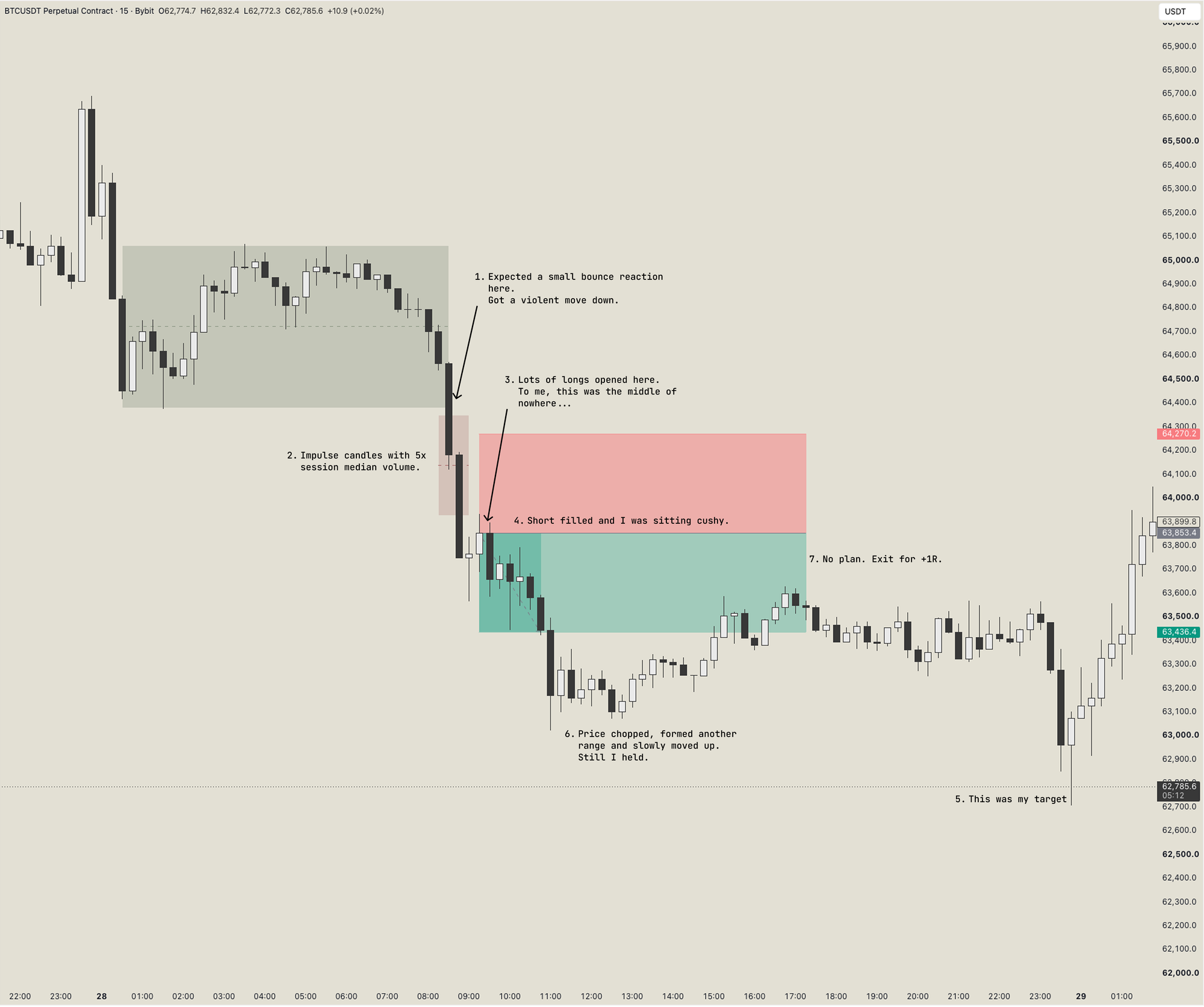
Early in Asia Session, activity started picking up as price approached the lower boundary of a range. I was watching to see what kind of reaction there would be at around the $64.4K range and expected a little bounce (this session can be a graveyard).
I wasn’t quite expecting the very violent move that followed.
Instead of a tiny bounce, the market dumped. And it dumped hard, completely breaking through the level.
I observed two consecutive $150M candles to the downside. Based on my most recent calculation (which I’ll need to re-do soon-ish) median volume during this time is around $33M. Seeing two impulse candles each move on 5x volume was big.
I looked closely at the order flow data to identify where aggression took off and watched. Shorts piled in and in the middle of nowhere, a whole bunch of longs opened.
I placed my limit order, got filled and smugly watched as price barely went past my entry before moving down. My target was another liquidity zone which I identified and wowee, a potential +3.5R trade. I was already preparing my update TRADING#NUMBERS and call myself BREAKOUT KING.
The Trading Number.
This week’s trading number was trade duration.
For System 1.0, the duration of Breakout setups currently averages 87 minutes.
This one lasted 376 minutes. More than four times longer than average.
During that time, I had several opportunities to close for anywhere between +1.5R to +2.5R. But I didn’t, and I knew why.
Greed.
I kept telling myself it was only a few more candles until that sweet +3.5R, but it didn’t come (at least during my trade).
The Outcome
I caught the impulse with an amazing entry, but what actually happened was price started consolidating. It bounced around a little (keeping me excited with my trade still in the +1.5R to +1.7R mark) before forming a new and tight range.
As I held, I slowly saw market structure begin to break (though on lower volume) and show movement to the upside.
My overconfidence gave way to stubbornness and left me somewhat paralysed while exposing a major gap in the System: exiting.
I didn’t know what to do. I didn’t have rules or a plan here. So I did what I did and just closed for +1R.
Sure it was a winning trade, but the opportunity capture was poor. Very poor.
I was frustrated and very disappointed at how I managed it.
The Audit + Next week
Following this trade, I noted this was something that needed fixing. And you know what.
A very similar thing happened again with Trade 25. I caught a move to +1R and wanted to close for +2R. I held the position for 127 minutes, and basically ran it all the way back to near breakeven.
Clearly this needed to be patched in a way that suited the System. I’m 25 trades in and making progress and this needed to be fixed fast, so nothing drastic.
The patch:
For Breakout trades, once a price hits a meaningful liquidity point in the direction of the trade:
- Continue holding if order flow data shows sustained aggression in the trade direction and supported by elevated volume.
- Exit if order flow data shows opposing aggression with elevated volume.
- If none of the above, then if there is no meaningful price action for three completed 15-minute candles, just exit the trade and move on.
Okay there is a lot of nuance here when interpreting order flow. But I guess that makes trading part art (for now). Ok that sounded a bit poetic, but the idea is you really just need context.
Next week, the focus will be on applying this new management rule while continuing to collect data around the New York open.
Onto Week 09.
Member comments